
Flipper Devices Seeks Community Support for Flipper One Open Linux Platform
Flipper Devices is asking the community to help develop Flipper One, a powerful ARM-based Linux platform designed for networking, hardware experimentation, SDR analysis, modular expansion, and future AI-focused use cases.
Flipper Devices, the company behind the Flipper Zero pentesting tool, is calling on the open-source and hardware development community to help shape its next major project: Flipper One, a portable Linux-based platform designed for connected-device research, networking, and hardware experimentation.
Unlike the Flipper Zero, which is primarily focused on offline access control and radio technologies such as NFC, RFID, infrared, and sub-GHz communication, Flipper One is being developed as a more powerful ARM-based Linux computer. The company emphasized that Flipper One should not be viewed as a direct upgrade to Flipper Zero, but as a separate project with a different purpose and technical direction.
Flipper One is designed to support more advanced workloads, including software-defined radio analysis, network diagnostics, hardware development, and potentially local AI workloads. The platform is built around the Rockchip RK3576 ARM SoC with 8 GB of RAM, paired with a Raspberry Pi RP2350 microcontroller in a dual-processor architecture.
In this design, the main CPU handles Linux-based tasks, while the microcontroller independently manages core device functions such as the display, power system, buttons, and boot process. This allows parts of the device to remain operational even when the main operating system is powered off.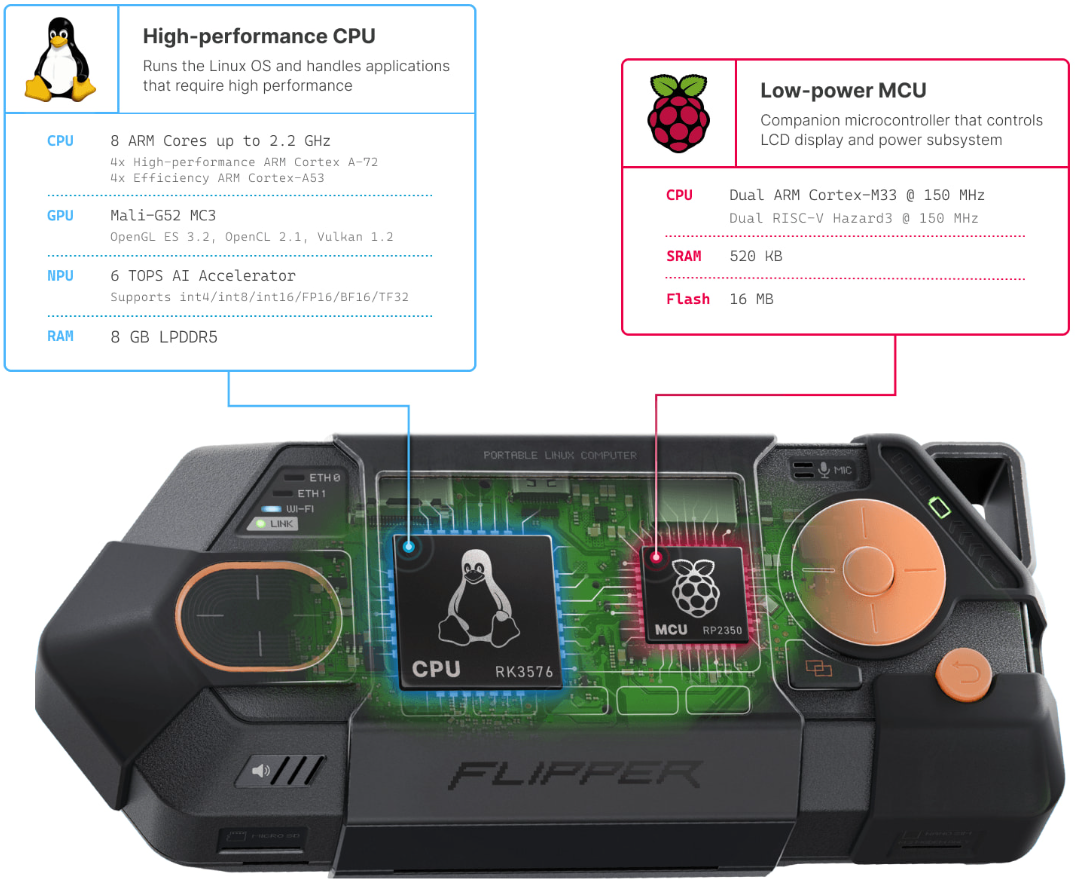
The device is also being built with modularity in mind. Planned hardware support includes M.2 and GPIO expansion, along with PCIe, USB 3.1, SATA, UART, I2C, and SIM connectivity. This could allow users to add components such as SDR modules, SSD storage, Wi-Fi cards, AI accelerators, and 5G or satellite modems.
According to Flipper Devices, Flipper One could be used as a portable router, VPN gateway, network bridge, compact Linux workstation, media device, or field-ready development platform.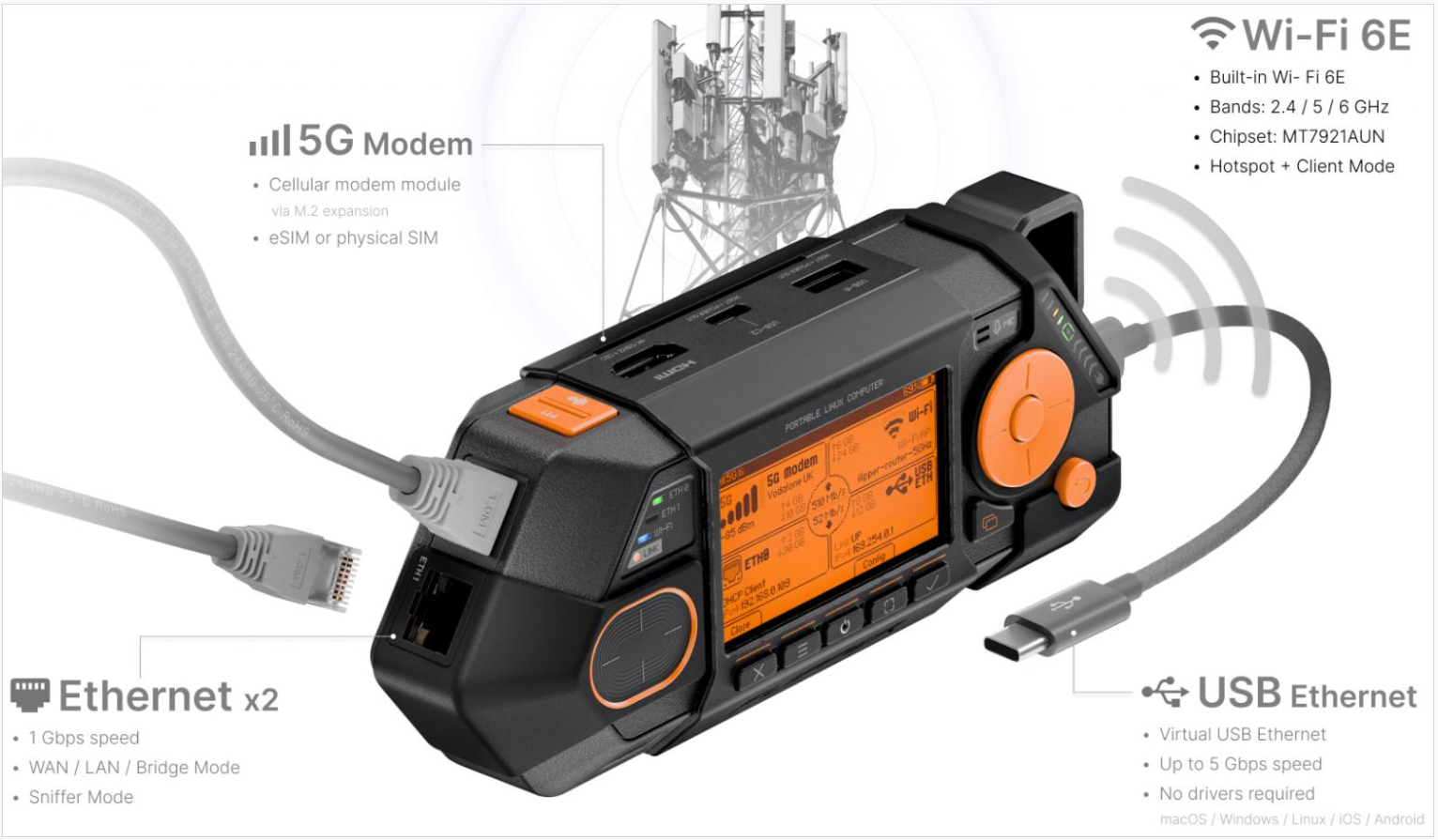
Development Challenges
Although Flipper One has been in development for several years, Flipper Devices says the project has proven to be significantly more complex than originally expected. Multiple teams are currently working on hardware design, mechanical engineering, RK3576 software support, microcontroller firmware, user interface development, documentation, and testing.
The company is now inviting engineers, software developers, designers, and interested users to contribute ideas, testing, development work, and feedback.
Key challenges still facing the project include achieving full mainline Linux support for the Rockchip RK3576 SoC, reducing dependence on proprietary vendor components, developing drivers for the custom CPU/MCU architecture, building the Flipper OS and FlipCTL framework, and resolving compatibility issues involving USB-C DisplayPort Alt Mode, hardware video encoding, Wi-Fi analysis, satellite connectivity, and offline AI support.
Flipper Devices also pointed to the broader difficulties of ARM Linux development, noting that many vendors rely on closed boot components, custom patches, and board support packages that can be difficult for outside developers to maintain or understand.
Collabora is currently assisting with efforts to bring full RK3576 support into the mainline Linux kernel, which the company says is progressing well.
Still an Early-Stage Project
Flipper One remains an active development project and is not yet a finished or shipping product. Current prototypes still have unfinished hardware and software components, and several major design decisions have not yet been finalized.
Flipper Devices founder Pavel Zhovner acknowledged that the project carries both technical and financial risks, including uncertainty around component availability and memory pricing. However, the company says it remains committed to moving the platform forward and will continue sharing development updates through its Flipper R&D channels.
Overall, Flipper One represents a major shift from Flipper Zero’s compact pentesting-tool focus toward a more powerful, modular, Linux-based platform for networking, research, and hardware experimentation.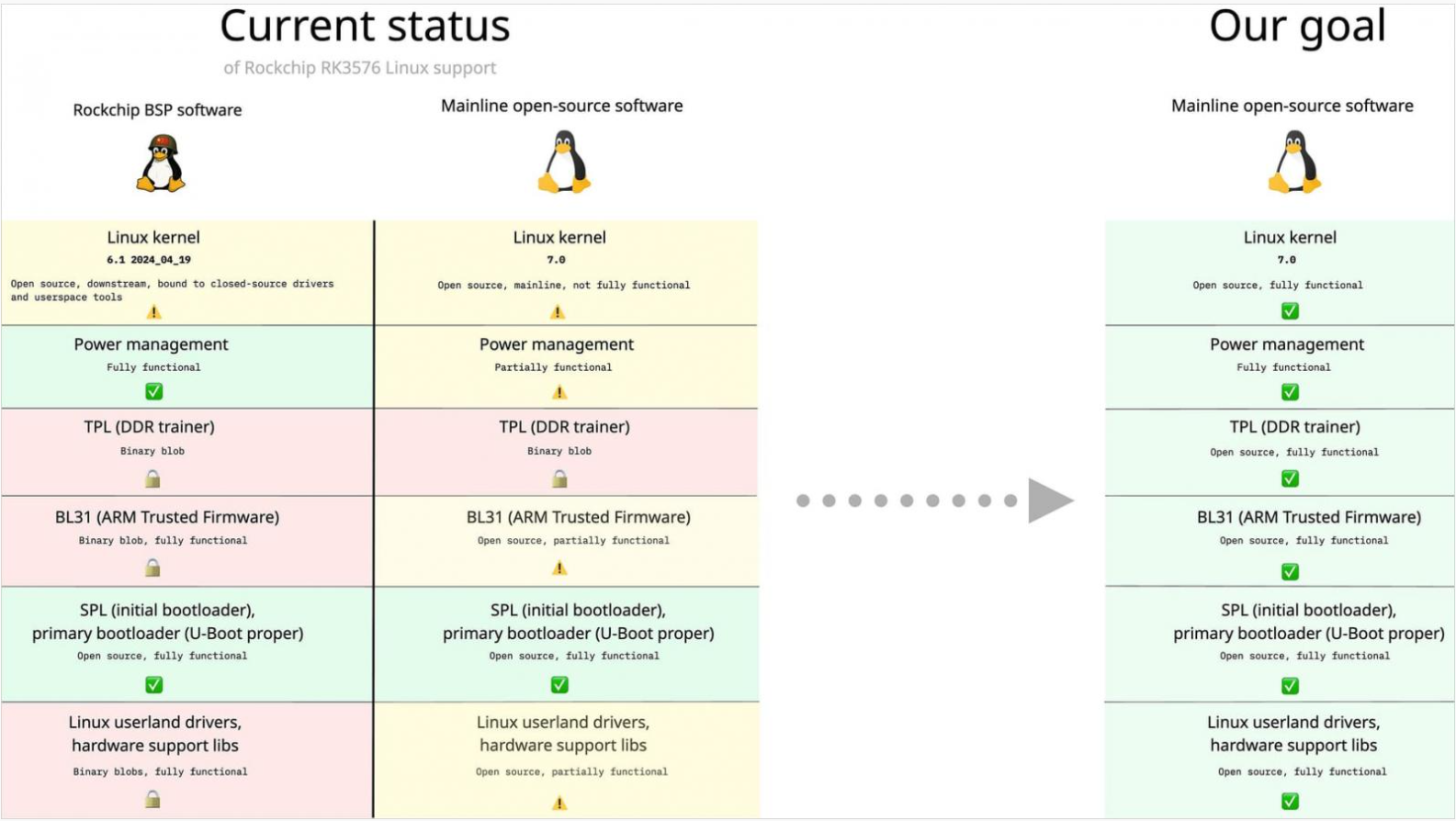

Comments
0 public comments
No comments yet
Be the first to add a comment to this article.
Add a comment
Please sign in to comment on this article.
Sign In